
Worksheets and No Prep Teaching Resources
Reading Comprehension Worksheets
Earth
Earth
|
Worksheets and No Prep Teaching Resources Reading Comprehension Worksheets Earth |
Earth |
| edHelper's suggested reading level: | high interest, readability grades 5 to 7 | |
| Flesch-Kincaid grade level: | 6.29 |
|
What Causes Plates to Move?
By Patti Hutchison |
|
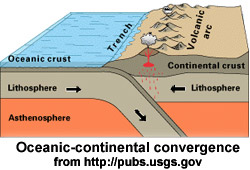 1 They say a watched pot never boils. But do you know what happens when a pot of water does boil? The water is hotter near the bottom where the heat source is located. The cooler water on top sinks to the bottom. The hotter water on the bottom is pushed to the top. This is a kind of convection current.
 |
Create Weekly Reading Books
Prepare for an entire week at once! |
| Leave your feedback on What Causes Plates to Move? (use this link if you found an error in the story) |
|
Earth
|
 |
Special Education Science Materials for Teachers
|
 |
Science
|